
Google Ads vs Facebook Ads: Intent vs Impulse in Ecommerce
Georgie Client Relationship Manager
Published
Google Ads vs Facebook Ads: Intent vs Impulse in Ecommerce
Google and Meta have a lot in common. They’re billion dollar tech giants, they’re obsessed with AI, they’re beloved by tech bros. They also both make the majority of their revenue from digital advertising. As such they’re two of the most effective digital marketing platforms out there – particularly for e-commerce brands and online shops.
But most of us don’t have unlimited advertising budgets. We need to be intentional about where our money goes. So if you’re an e-commerce brand, the winning question is easily this: which is better, Google Ads or Facebook and Instagram (AKA Meta) Ads? The answer is everyone’s least favourite digital marketing adage: it depends.
But before you sigh in irritation and increase our bounce rate on Google Analytics, give this blog a read – we’ll be looking at both platforms, the benefits of each, and helping you to get some much-needed clarity on what’s right for you. But before we do that, we need to look at why people buy, and the difference between impulse and intent.
The psychology of shopping: intent and impulse.
Intent purchases are planned. You’re actively looking for whatever you purchase – be it a particular product or a solution to a problem – so you’re primed to buy with a clear objective. When we buy something with intent, we research, compare and evaluate before making a decision – like researching new phone models online when it’s time for an upgrade.
Impulse buying is spontaneous, a split-second decision normally made in response to scarcity marketing tactics like FOMO or urgency, or emotions like stress or desire. Think long, hard days at the office, or especially exciting visual stimuli. It occurs without proper planning or forethought – like clicking on an ad on a whim and purchasing the product because it’s on sale.
Understanding intent in Google advertising
While there are exceptions such as Display ads or YouTube ads, Google is for the most part an intent-based platform.Search and shopping ads are by far two of the most popular ad formats for Google – 98% of PPC professionals use search in their PPC campaigns according to Semrush. These ads appear at the very moment that your prospective customers are searching for you, e.g. an online shop selling diffusers would bid on terms like ‘diffuser’ or ‘diffuser and refill’ and appear in response to Google searches using these keywords.
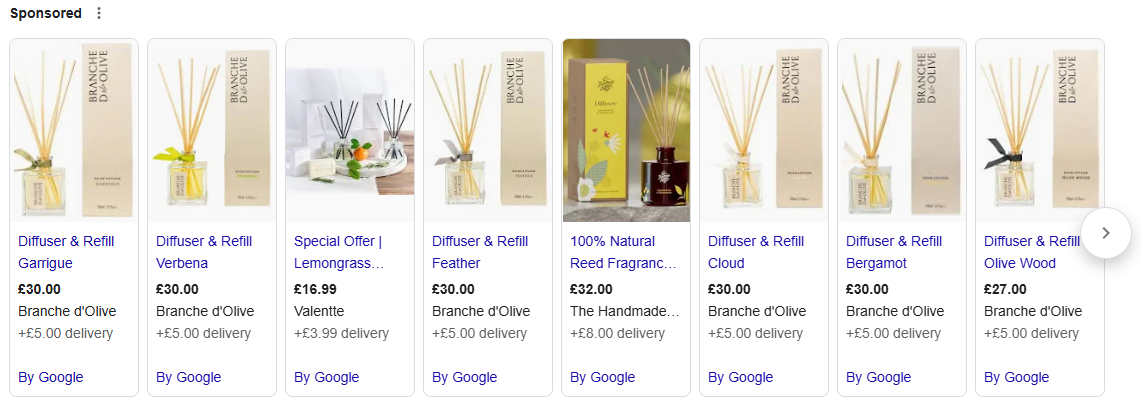
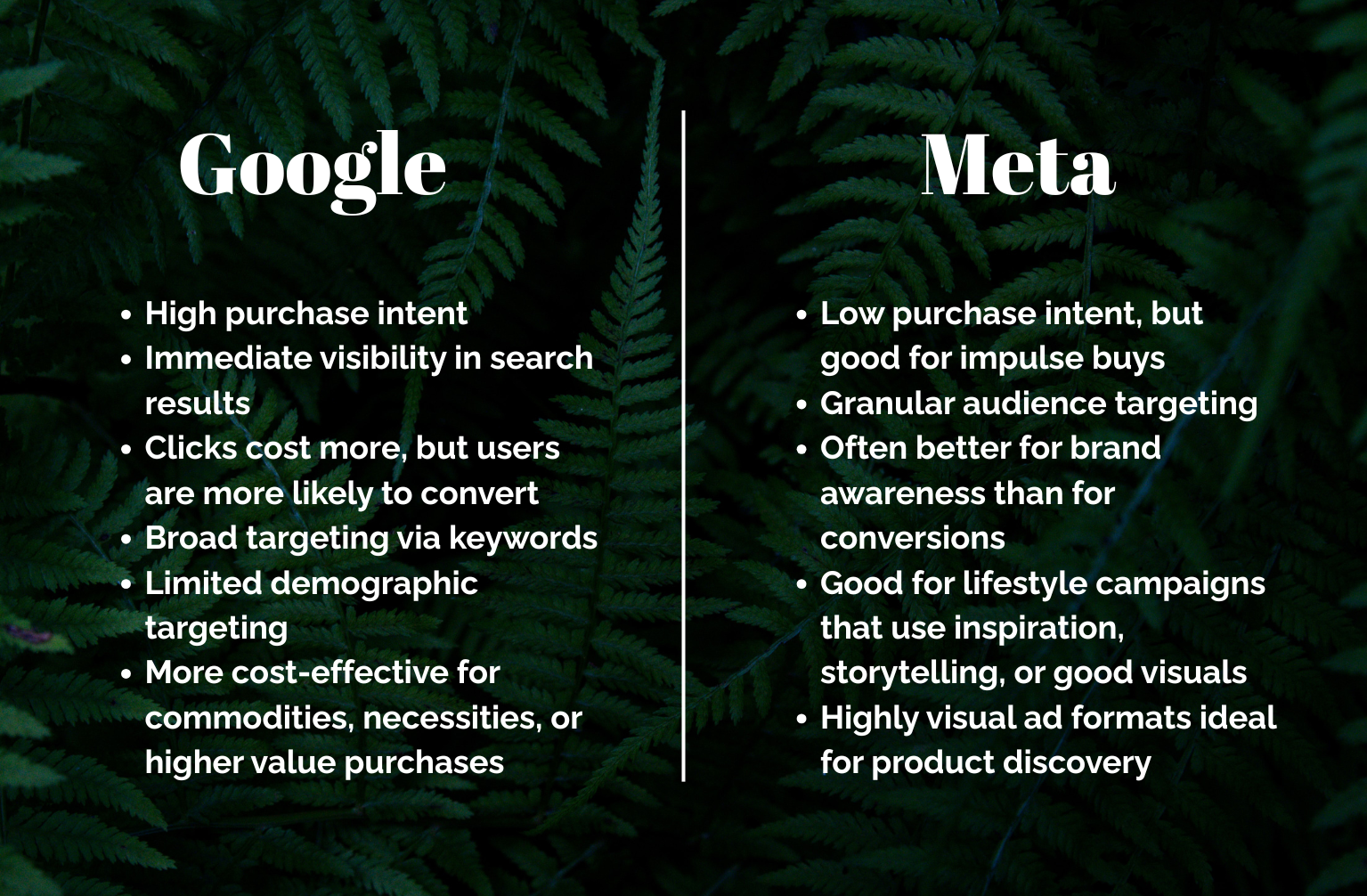
The benefit here is that strong user intent results in high conversion rates and quick ROI. On the downside, it’s competitive, can have high cost-per-click inflation, and discovery is limited for users without intent. That means that for Google Ads, the priority is keyword research, a relevant landing page that matches the user’s keywords and intent, and compelling ad copy.
Understanding impulse in Meta advertising
Meta ads don’t work in response to user search. Instead, the Meta algorithm analyses vast amounts of data, such as personal demographics, interests, and past behaviors, to identify who is most likely to interact with the ad (and dictate who sees it as a result). While the algorithm prioritises relevant users, it doesn’t work based on active intent, so the user might not necessarily know they want or need anything – until they see the ad.
Subsequently, the benefits are a wider reach and access to personalised targeting. The disadvantage is the lower purchase intent and an arguably higher potential for wasted spend. So for advertisers, one of the most important elements to focus on is visuals. You need captivating creative that actually stops the scroll and attracts attention (made simpler by the wider variety of ad formats Meta offers: carousel ads, collection ads, video). Other considerations will obviously be the copy (for the same reason), and the targeting to make sure your ad gets in front of the most appropriate eyes.
Google ads vs Facebook ads – performance compared
When it comes to ecommerce, it always boils down to what you’re selling and who you’re trying to reach. For high-intent purchases – commodities, necessities, or higher-ticket items that you wouldn’t buy on impulse – Google is the clear winner. When someone is searching for relevant keywords, they’re already halfway down the funnel, and that makes conversions much easier to achieve quickly.
Meta ads excel in sparking interest and driving impulse buys, so it’s a good platform for lifestyle products like fashion, beauty, or home decor, or anything with the potential for captivating visuals. Meta campaigns are also great for brand awareness and engagement, and its visual formats can mean your ads are much more memorable, even if the intent to buy isn’t immediate.
On a practical level, for smaller brands, it also depends on your resources. If you have brilliant photography, videography or graphic design capabilities, you could create an eye-catching Meta ad pretty easily. If your product has lots of high volume, low cost keywords, you’ll likely see some fairly cost-effective success on Google.
How to use both Google ads and Meta ads in your marketing strategy
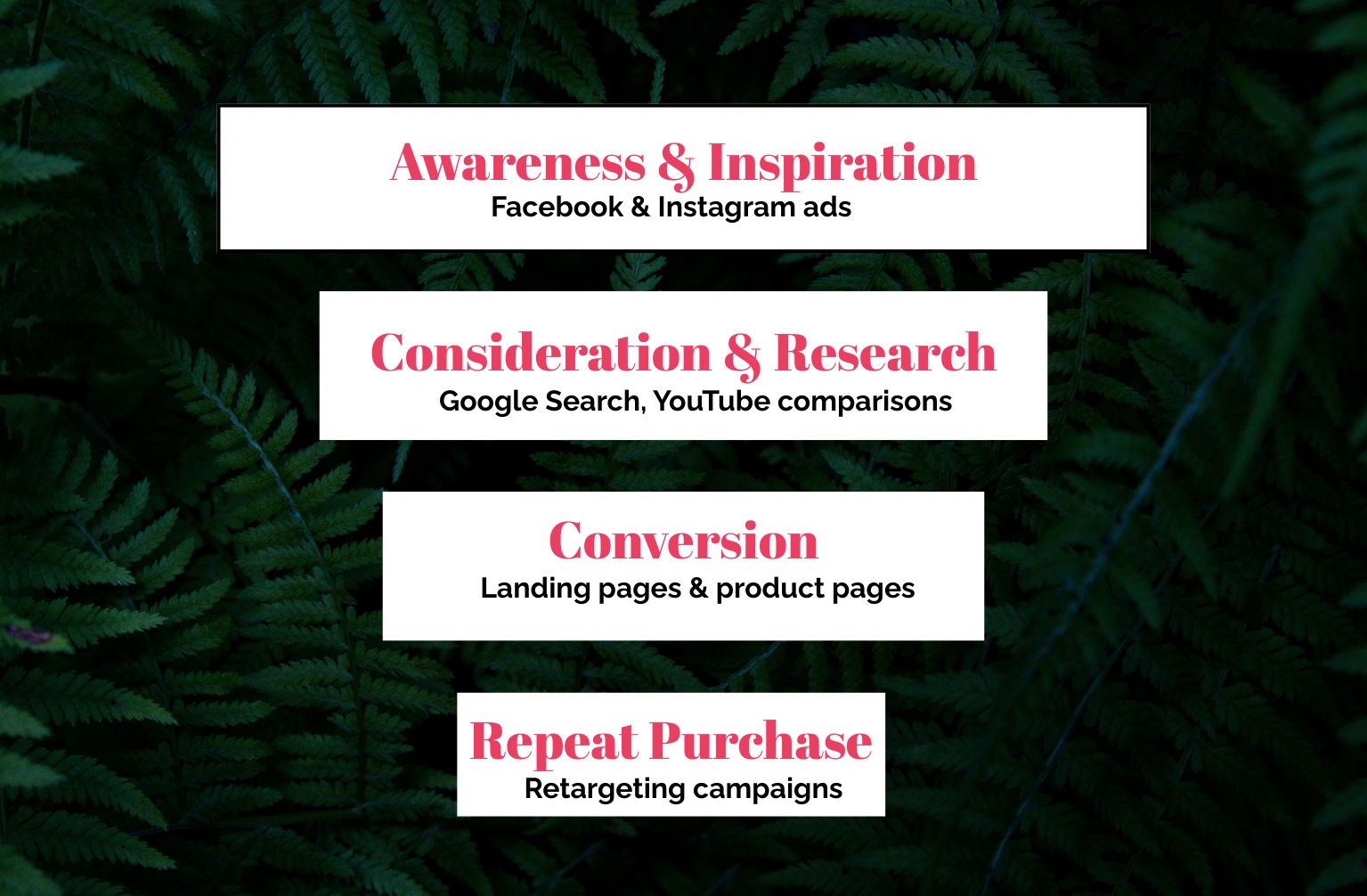
In reality, most successful ecommerce brands use both channels in tandem: Meta for creating demand, and Google for closing conversions.
For lower-ticket products, you’d use Meta and Google simultaneously – Meta to showcase more dynamic product ads with good photo and video content, and Google to capture traffic from high intent keywords.
For higher-ticket items, a common funnel approach would be using Meta for top-of-funnel brand awareness and inspiration – capturing interest with exciting visuals, showcasing the brand, and demonstrating the product in action. Then, you’d capture demand on Google when the customer begins searching for more information, price comparisons, or reviews. This not only works for high-ticket e-commerce, but is a common funnel for lead generation.
Retargeting campaigns on both Google and Meta play a crucial role here. Someone who clicked a product ad on Instagram but didn’t buy can be re-engaged with a Google Display or Shopping ad. Likewise, a visitor who landed on your website from a Google search can later be reminded of your products through a dynamic Facebook or Instagram ad. By using retargeting campaigns across both platforms, you can guide customers from initial discovery to final purchase, attracting both impulse and intent traffic and conversions.
Want to make digital advertising easier?
Wrangling with paid advertising platforms can be a struggle. We know, we do it for a living. If you want a hand getting started on Google, Meta, or any other channel, send us a message about our PPC services.