
What is a rebrand? The ultimate guide to rebranding a business.
Georgie Cunningham Client Relationship Manager
Published
From the celebrated changes of Sandisk to the, erm, somewhat controversial transformation of Jaguar, lately the word ‘rebrand’ has been on everybody’s lips.
But what consumers and the mainstream media often miss is that a rebrand is far more complex than just changing a logo, releasing a different style of ad, or even switching your brand’s name.
It’s a big, strategic decision, often discussed at length in board rooms, representing anything from a shifting target audience to a changing world.
In this guide we’ll walk you through all things rebranding: why businesses choose to rebrand, examples of rebrands done right (and what happens when it goes wrong), and when it makes sense to consider one. Because all businesses grow and adapt, not just the blue chip ones.
What is a rebrand?
A brand’s identity is the way that it is perceived by consumers and stakeholders. It’s the visual and conceptual representation of purpose and products, including not just logos and typography, imagery and iconography, but tone of voice and key messages. It’s how you communicate, in words and in their absence.
A rebrand is the evolution, or total transformation, of your brand identity. It doesn’t just refine the things you can see, but the things you can’t: purpose, story, strategic direction.
Rebrand vs brand refresh
These two terms are sometimes used synonymously, but they shouldn’t be. A brand refresh refers to a smaller update to a brand’s visual identity or messaging, often in response to modernisation or market demands, to stay sharp or relevant.
A rebrand is a more significant overhaul: it requires inspection of the brand’s overarching business goals, the requirements of stakeholders, its reasons to exist.
Rebrands aren’t always all-encompassing, and from an outside eye it can look as though elements have been updated rather than transformed, but behind the scenes that brand’s strategy will have shifted to align with new goals, changing markets, or the needs of consumers.
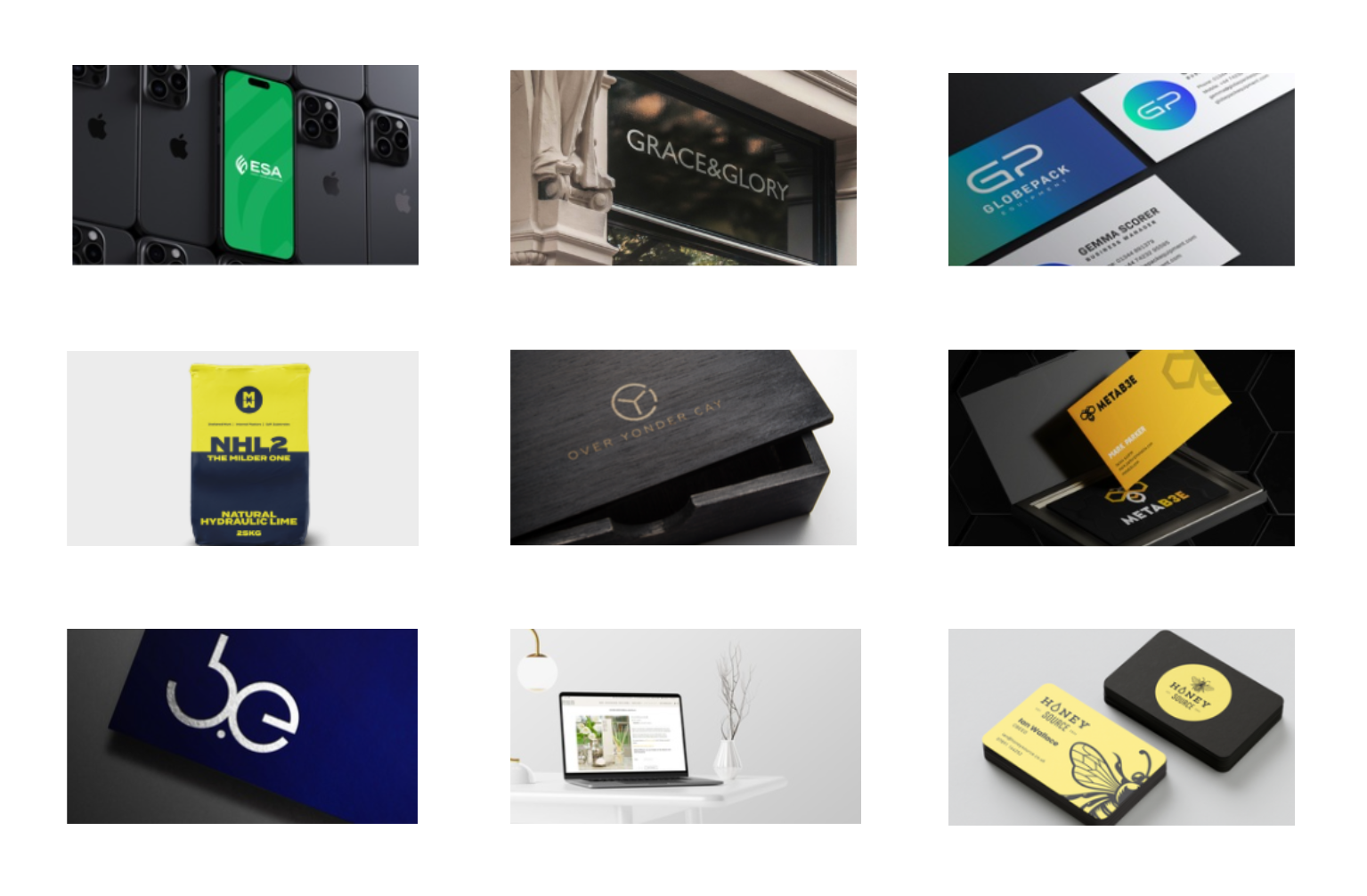
Why do companies rebrand?
A rebrand is no small job. Aside from the level of introspection and planning that goes into the initial project, it necessitates a huge amount of physical transformation – from updating marketing materials and sales collateral to requiring substantial changes to your website design and content.
The bigger a brand becomes, the more assets it inevitably has, and the bigger the job becomes, so for the blue chip brands in particular it is not a decision that is taken lightly. So why do it?
1. Your business has evolved: If your products, services, values or target market have shifted since the brand’s inception, it might not reflect you anymore. A rebrand helps to realign your identity with not just your vision, but your offering – like when Starbucks dropped ‘coffee’ from their logo, representing a renewed focus not just on coffee but on food, soft drinks and tea.
2. Mergers and acquisitions: When two brands come together, it can make sense to start afresh with a new identity that reflects the combined businesses. A rebrand helps unify dual audiences, visions and company cultures into one.
3. Media demands: The way we communicate with consumers has changed. Brands that were conceptualised during print advertising may not be as effective in digital formats. Logos that were created for computer screens might need to be adapted for much smaller mobiles. The rise of social media marketing and video might require your brand assets to be more flexible than traditional mediums once required. As technology and our resulting marketing channels change, rebrands become an exercise in practicality.
4. Publicity (both good and bad): Some rebrands are for the purpose of generating excitement – particularly if the rebrand is for a product rather than the overarching business. On the other hand, a rebrand can follow particularly bad press or controversies that have negatively impacted their brand equity.
5. Entering new markets: If a company is expanding, particularly into new, international regions, existing brands may need to change to adapt to other territories or cultures to broaden their resonance.
6. Growing pains: What once felt fresh and modern can start to feel tired. What once felt innovative can begin to seem amateurish. Rebranding can give your brand a boost so it accurately reflects the quality of your offer, letting your credibility creep up and increasing trust with your customers.
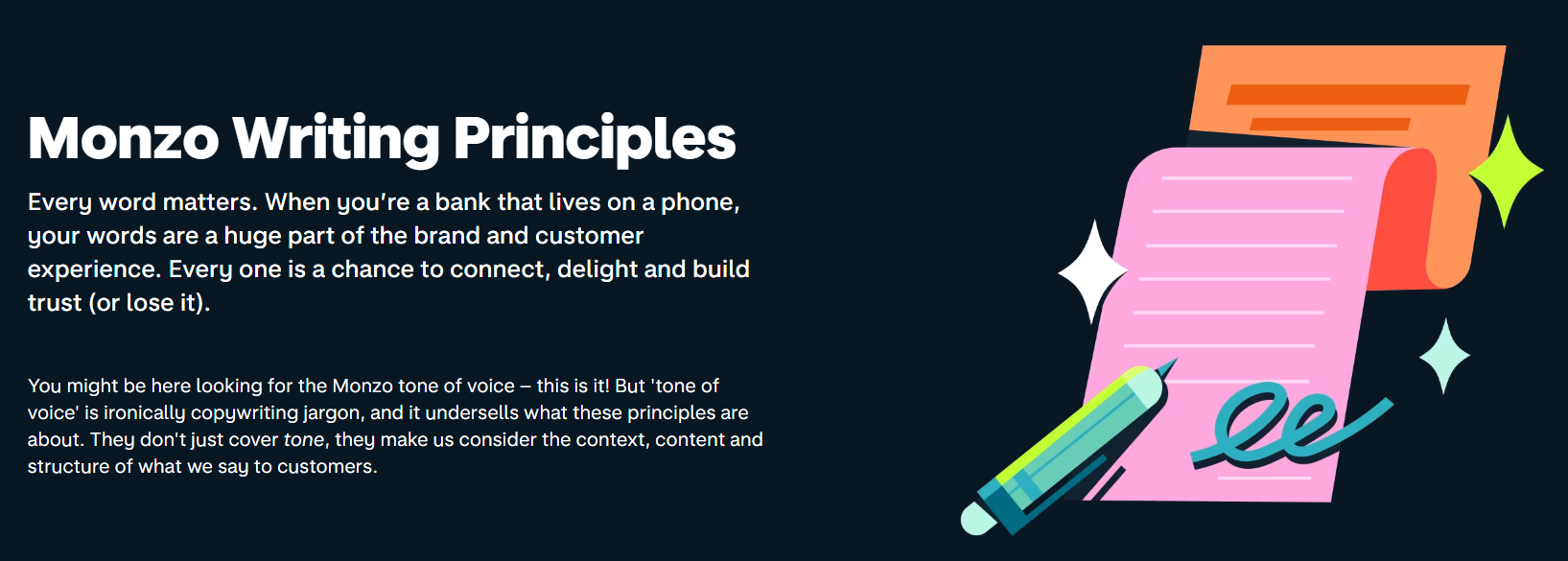
7. Standing out: There are more businesses than there have been. Sectors can quickly become saturated. If your brand looks like everyone else’s, you’ll disappear into an ocean of ordinary. Often the decision to rebrand comes from wanting to stand out in a competitive space, making a brand identity more memorable and increasing brand equity. Monzo’s bold branding and light-hearted, conversational tone of voice comes to mind here – deliciously different in a desert of dry and dense financial services content.
What are the benefits of rebranding?
- Improved customer perception: Rebranding can boost credibility, trust and relevance in the eyes of your customers.
- Creating relevance when repositioning: If you’re repositioning, a rebrand can help you hit the ground running with a new target audience or within a new market.
- Increased brand equity: A strong brand can become an asset: something people are loyal to, advocate for, and are even willing to pay more for. It can make your business more valuable.
- Internal culture: Rebranding isn’t just for consumers, but for internal stakeholders. From employees to board members to investors, rebranding can create clarity around your values and vision, creating purpose and a sense of pride.
- Marketing momentum: Both company and product rebrands can build buzz, giving you valuable PR and campaign opportunities to re-engage existing customers and create relationships with new ones.
- Translating into sales: At their most impactful, rebrands can boost sales – especially if the current brand isn’t resonating with the audience, or it’s part of a wider brand marketing campaign. For instance, Old Spice’s iconic 2010 rebrand (in which they shrugged off their reputation of being for older men and targeted a younger audience, particularly with their The Man Your Man Could Smell Like advert) increased sales by 107%, and won them 83,000 followers.
A successful rebranding campaign for an SME might not be quite that drastic (then again, you probably don’t have the budget for Isaiah Mustafa), but it can absolutely increase brand awareness, improve loyalty and differentiate from competitors in your space – leading to direct and indirect sales and business growth.
Rebranding done right
The best way to measure the success of a rebrand isn’t always ROI though. It could be increased brand awareness, clarified positioning, improved customer perception, or better employee engagement. When employees feel proud of the brand and customers feel more connected to it, those are powerful markers of rebranding done right.
Examples of successful rebrands
Co-op UK
Back in 2016, The Co-operative Group reintroduced its iconic 1968 ‘cloverleaf’ logo, replacing the corporate ‘The Co-Operative’ branding that had been adopted in the early 2000s. The goal here was to reconnect with its heritage and community ethos (and shake off some damage to the brand’s reputation following a spate of scandals in the 2010s).
Why it worked: What helped cement this as a successful rebrand wasn’t the visual change but what happened behind the scenes: Co-op revamped its membership scheme, offering members a 5% reward on own-brand purchases and contributing 1% to local community causes, strengthening the cooperative ethos that built the foundation of the brand.
Sandisk
Sandisk is a more recent example of a successful rebrand. It introduced a sleek, all-caps logo inspired by a single pixel, symbolising the brand's focus on digital innovation and data mobility, as well as a new slogan 'Mindset of Motion’ to reflect a commitment to resilient data experiences.
Why it worked: This was Sandisk’s first rebrand in 17 years, representing a shift from legacy brand to forward-thinking, innovative leader – especially considering its 2025 transition to a standalone public company after separating from Western Digital.
When rebranding becomes risky
If you spend any time on the marketing side of LinkedIn, you’ll know that marketers and designers love talking about branding – particularly when it goes wrong. But when actual consumers hate your rebrand, you may have a problem.
Jaguar's controversial rebrand
People haven’t shied away from being critical of Jaguar’s 2024 rebrand. The main purpose of the rebrand was to mark a transition to an all-electric luxury brand by 2026, so the brand chose to move away from its traditional British heritage, focusing on a minimalist logo and avant garde advertising that used bold colours and abstract visuals.
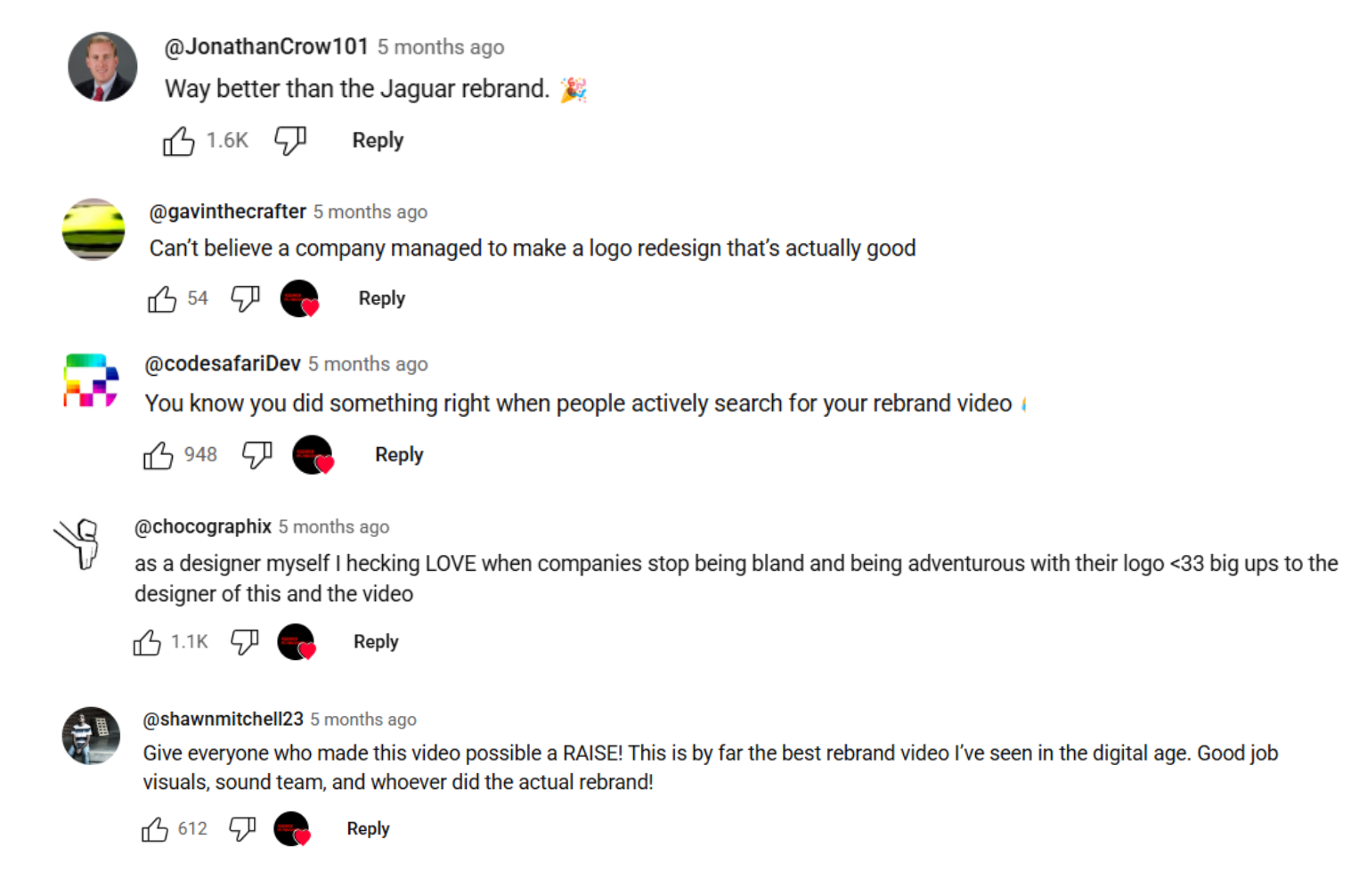
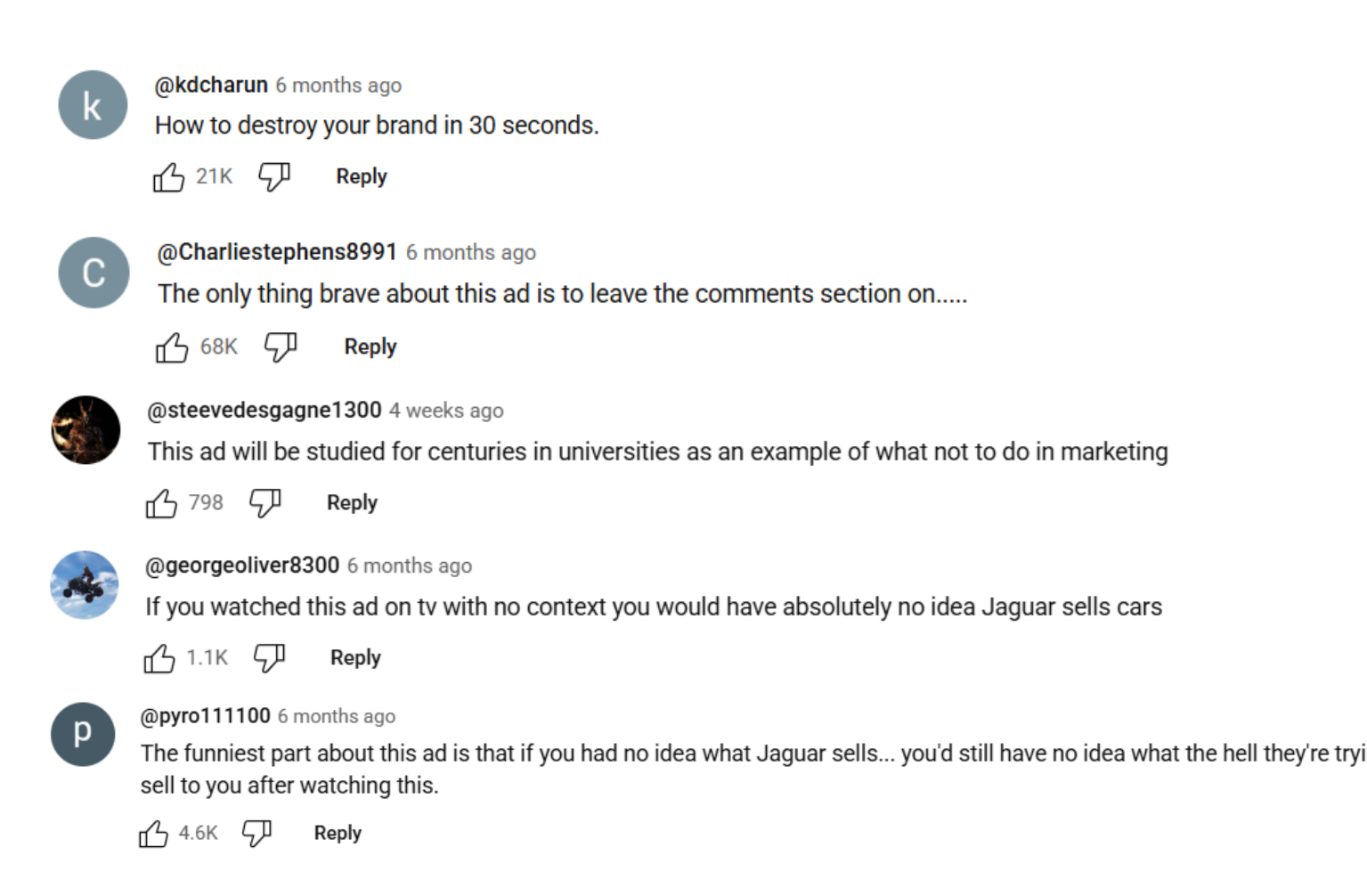
While some of the initial backlash seemed to spark from the perceived ‘wokeness’ of the rebrand, more legitimate concerns discussed the alienation of Jaguar’s legacy audience, the abstract nature of the design and the lack of clarity around the brand and its product offering (popular sentiments included the absence of any cars, and that it seemed more like an ad for a clothing or perfume brand). Others have defended the ad, arguing that anything that generates the level of press the Jaguar ad had is an example of good PR.
In any case, the Jaguar bosses have doubled down on their decision rather than retracting. The creative itself may still be polarising, but we appreciate the integrity and commitment to the brand’s new ethos.
Twitter becomes X
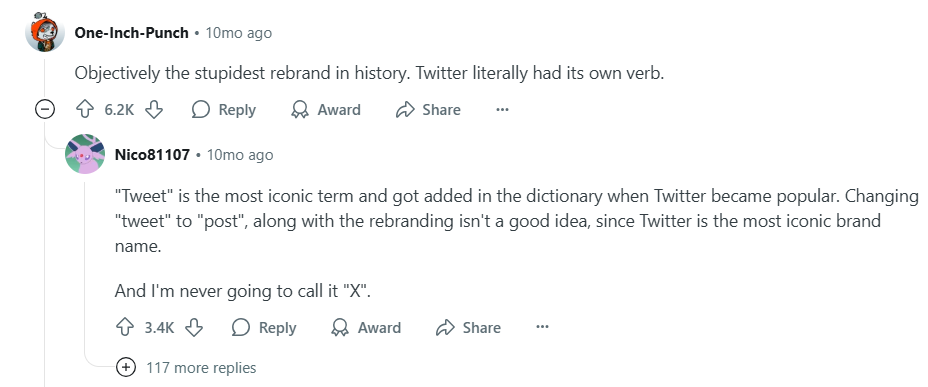
In 2023, Elon Musk acquired Twitter and rebranded it as X. It received a huge amount of attention – much of it in the form of memes (most of them posted on X). So, what was wrong with this rebrand? For starters, the previous Twitter brand held an exorbitant amount of brand equity to the point where Tweeting became a verb and the blue bird logo was recognisable anywhere.
As a branding agency ourselves we know how much thought goes into the branding process, but the decision to rebrand as X seemed to be based more on Elon Musk’s preference for the letter X than anything else (he’d previously tried to rebrand Paypal as X.com; he’s since created SpaceX) and thus it seemed more like a personal branding exercise than one tailored around the business.
However you feel about the rebrand, it definitely marked a change for X: Musk has integrated many additional features onto the platform, including the ability to pay for premium accounts; it marked the beginning of a mass exodus of brand accounts (including, bizarrely, Bristol’s Clifton Suspension Bridge); and an entourage of apps not quite managing to replace it. While the controversy of the rebrand has faded with time, the controversy of the app in general hasn’t, and clarifications of ‘FKA Twitter’ are still standard.
When should a company rebrand?
Rebranding isn’t something you do on a whim (not if you’re not Elon Musk anyway). It’s a hefty chunk of work, and it’s often not cheap either.
Successful rebrands happen at the right moment, or are triggered by market conditions. Think Sandisk marking their return to a standalone company, simultaneously adapting to a tech-first logo during the age of AI.
Perhaps your brand no longer reflects who you are, feels outdated, or looks amateur compared to new entrants to the market. Maybe the business has evolved, offering new services or entering into new markets. Perceptions might need changing following a tough chapter, like Co-op. Or it could be a proactive move: staying ahead of competitors, transforming internal culture, or aligning more closely with long-term strategic goals.
When a major change occurs, from refining a new business or marketing strategy to creating a new, UI-focused website, a rebrand may be the natural follow-up.
Roots Case Study: Best.Energy
Best.Energy is one of our longest-standing clients, and we worked together in 2020 to develop a sharp new brand that would represent their expansion as a global company, and the release of their franchise scheme – in which companies from around the world could license their products.
The primary objective was to create a strong, globally-relevant story to tell. This would help their employees, clients and partners really understand the importance of their work and see the international scale of their franchise network.

The chosen message was simple: “Switch on to efficiency”. The minimalist geometric monogram is constructed around the universal symbol for “power” or “on/off”. The character’s circular shapes represent the care for our planet as a core value. The ‘dot’ between the two words is a simple slider, used in Apple UI worldwide. The company name is also their web address making it easy to immediately access more information.
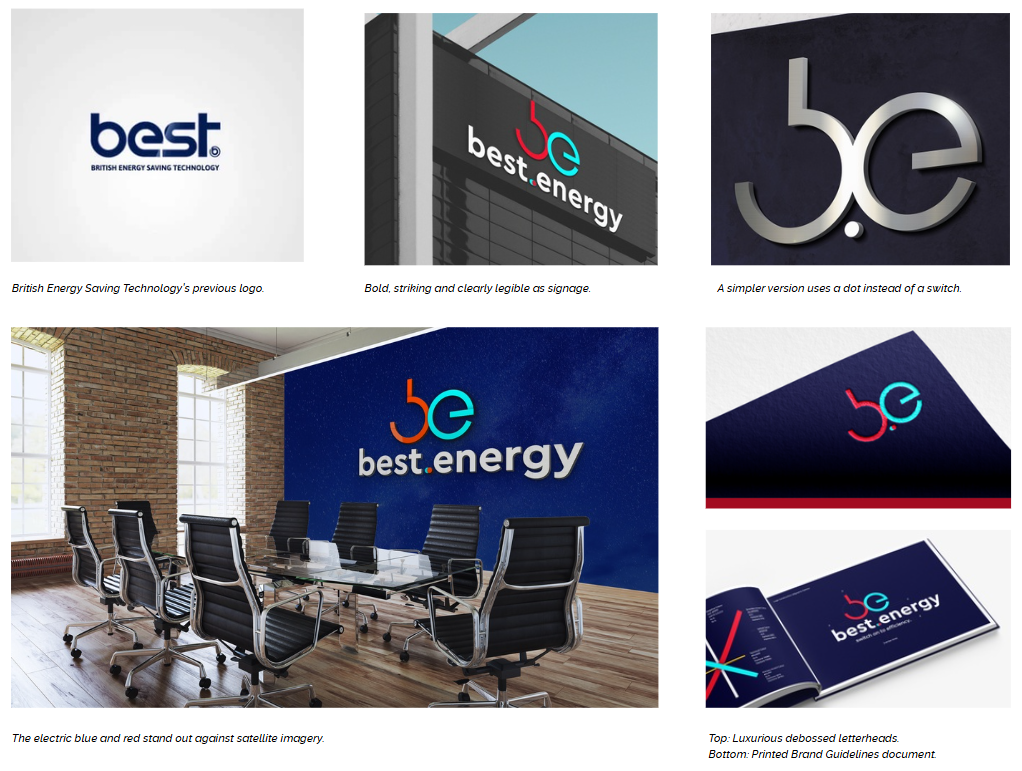
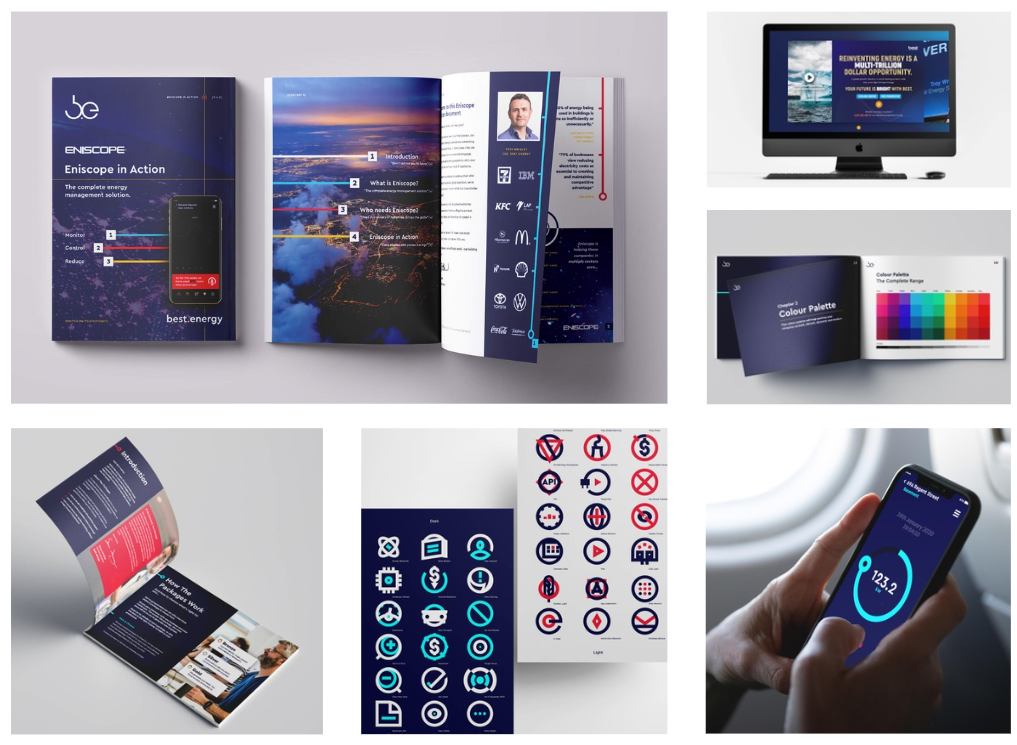
The strong, strikingly-coloured network lines of the logo are carried across into all of the company’s marketing materials. The electric blue and red accent colours pop against on a dusky, space blue. Through extensive print tests, we’ve pinned down the perfect CMYK and Pantone colour values ensuring the brand is perfectly represented across print and web.
Best.Energy needs to clearly communicate their message all over the world. That’s why we created a comprehensive and universal icon library, intuitive mobile app interface and image heavy, story-driven landing pages.
Find out more about our work with Best Energy here.
How much does a rebrand cost?
The cost of a rebrand can vary massively, and that’s because the scope of the project does too. A basic logo evolution might start at around £1000 depending on complexity; for a bigger rebrand with more collateral and assets, you could be in the region of £5000 - £10,000; for larger-scale SMEs where extensive website development is also involved, you’d surpass £20,000; and of course for the major brands, who have to update signage, vehicles and uniforms, it’s not uncommon for a rebrand to cost hundreds of thousands.
That’s because a rebrand isn’t just about identity development. You’ll need to account for the design rollout phase and the brand imposition process – the part where you’d update digital and physical assets, print new materials, and launch marketing campaigns.
The rebrand cost should be viewed as an investment, with the potential to drive long-term value through increased brand recognition, customer loyalty, and market differentiation. The price of a rebrand should align with the level of change you're looking to make and the impact you expect it to have on your business.
Is rebranding right for you?
At Roots we’re specialists in brand strategy, and that makes us perfectly placed to help you with your rebranding projects. Our process kicks off with an interactive workshop to make sure you – the person who knows your business best – can work with our design team to create a brand you’re properly proud of.
If you’d like to kick off the process, find out more about our branding services, look at some of the brand projects we’ve worked on, or drop us a message.
“Design is the shortcut to everything a consumer knows about a brand – its purpose, its beliefs, its personality. Design is a reflection of your brand truth. When you make the decision to rebrand, you’re taking a risk with your brand’s reputation in order to further it, to evolve your business. It takes bravery, but bravery is often what separates stagnant brands from those that grow, resonate, and stay relevant.”
- Elliot, our Marketing Director who has been heading up marketing and brand projects for the last 15 years.
Rebranding: the FAQs
1. What is a rebrand?
A rebrand is the process of changing the visual elements and public perception of a business. It involves altering key assets of a brand, such as the logo, colour palette, messaging, and positioning, to reflect changes in business strategy, target audience, or market conditions.
2. Why do companies rebrand?
Rebranding can help companies stay competitive, reach new audiences, or refresh their identity. Common reasons include business expansion, changes in target demographics, updates to company values, or a desire to distinguish from competitors. A successful rebrand can increase brand awareness, improve customer perception, and drive business growth.
3. When is the best time to rebrand?
The best time to rebrand is when your current brand no longer aligns with your business goals or resonates with your target audience. Key indicators that it’s time for a rebrand include major business changes, evolving customer expectations, a desire to appeal to new markets, or outdated branding. Regularly reassess your brand to ensure it reflects your current identity and strategy.
4. How much does a rebrand cost?
The cost of rebranding depends on the size and scope of the project, depending on factors such as the complexity of design, the size of your business, and the level of change required. Smaller businesses can expect to pay on the lower end, while larger enterprises may need to invest more in a full-scale rebrand that includes logo design, website development, and marketing collateral.
5. What is the difference between a rebrand and a refresh?
A rebrand involves a complete overhaul of your brand identity, including elements like your logo, messaging, and visual style, to reposition your business or address significant changes. A brand refresh, on the other hand, involves updating certain aspects of your brand (such as typography or colour scheme) without making drastic changes. Refreshes are typically used to modernise a brand without changing its core essence.
6. How long does a rebrand take?
The timeline for a rebrand can vary based on the project’s complexity. A small business rebrand may take 1-3 months, while larger or more complex rebrands can take 6 months or longer. The process includes research, strategy development, design work, and brand imposition, all of which must align with your business goals.
7. Can rebranding help improve my sales?
Yes, rebranding can help boost sales, especially if your current brand is not resonating with your target audience or if it’s seen as outdated. A successful rebrand can increase brand awareness, foster customer loyalty, and differentiate you from competitors, all of which can lead to increased sales and business growth.
8. What are the risks of rebranding?
The most common risk is alienating existing customers, especially if the rebrand changes the brand’s core values or messaging too drastically. It’s crucial to carefully consider your brand’s current position, your audience’s response, and your business goals before deciding to rebrand.
9. How do I know if my rebrand has been successful?
The success of a rebrand can be measured through various metrics, such as customer engagement, brand awareness, sales growth, and market positioning. Positive feedback from customers, increased website traffic, and higher conversion rates are all indicators of a successful rebrand. It’s also important to track how the rebrand aligns with your overall business objectives, such as attracting new customers or entering new markets.
10. Can a rebrand improve my online presence?
Yes, a rebrand can improve your online presence by modernising your website, social media profiles, and other digital assets. A fresh, cohesive brand identity makes it easier to engage with your audience and stand out in a crowded digital marketplace. Rebranding can also improve user experience on your website, which can lead to better customer satisfaction and higher conversion rates.